Cultural Democracy in Contact Zones
On 2–3 July 2026, cultural practitioners, artists, educators, policymakers, researchers, and heritage professionals from across Europe gathered at Pianofabriek in Brussels and online for Cultural Democracy in Contact Zones, the final conference of the Erasmus+ project Training for the Contact Zone (TCZ).
The two-day event marked the culmination of an 18-month collaborative journey dedicated to developing and testing the Contact Zone methodology—a practical approach that equips cultural and heritage professionals with tools to facilitate dialogue, engage with contested histories, and foster cultural belonging through participatory practices.
Opening the Conversation: Culture, Democracy and Participation
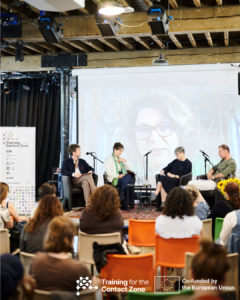
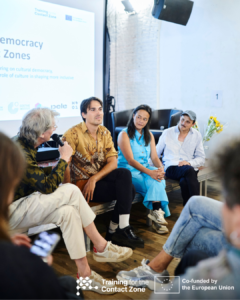
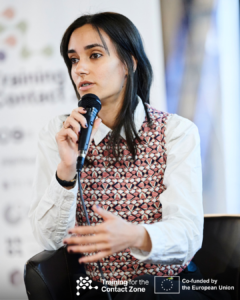
The conference opened with the panel Culture for People, People for Culture, moderated by Lars Ebert (Culture Action Europe). Bringing together Angelos Agalianos (European Commission, DG EAC), Erminia Sciacchitano (Permanent Representation of Italy to the European Union), Alexandra Xanthaki (UN Special Rapporteur on Cultural Rights), and Barbara van Lindt (KAAI Theatre), the discussion explored the relationship between cultural participation and democratic life.
A central message emerging from the panel was that participation in culture is not merely about access to artistic experiences, but about creating the conditions for people to actively shape cultural life. The conversation highlighted how cultural participation strengthens civic engagement, social cohesion, empathy, and democratic resilience, while also examining the role of cultural institutions as spaces where diverse perspectives can meet, negotiate differences, and imagine shared futures.
From Practice to Methodology
The second day shifted the focus from policy to practice.
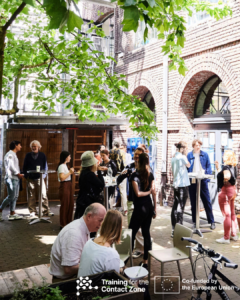
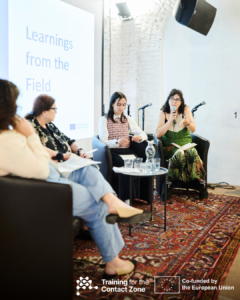
Participants were introduced to the Contact Zone methodology through presentations of the project’s curriculum, training approach, and educational resources. Sessions such as Inside the Training and Learnings from the Field reflected on experiences gathered throughout the pilot trainings across Europe, demonstrating how the methodology supports professionals working with dialogue, mediation, contested narratives, and cultural heritage.
Rather than presenting a fixed model, speakers emphasised the importance of adaptability, recognising that each cultural context requires different approaches while sharing common values of participation, multivocality, critical reflection, and cultural rights.
Looking Towards Structural Change
The afternoon programme explored how Contact Zone practices can continue beyond the project itself.
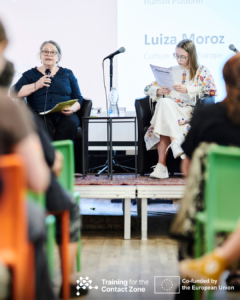
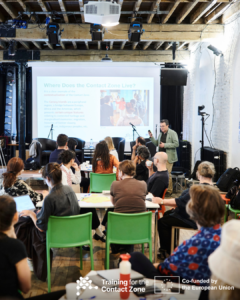
During Where Does the Contact Zone Live?, participants reflected on how the methodology can be embedded across cultural institutions, educational settings, museums, and international networks.
The conference concluded with How Do We Make Structural Change?, moderated by Frans Damman (H401). Through inspiring contributions from Benjamin Caton, initiator of the Decolonial Indonesian Dutch Commemoration, and Romy and Gable Roelofsen, founders of Het Geluid Maastricht, the session explored how grassroots initiatives, artistic practice, institutional commitment, and public policy can work together to create lasting cultural transformation.
The discussion reinforced one of the conference’s key messages: meaningful change requires more than individual projects. It depends on sustained collaboration, supportive policy frameworks, long-term investment, and institutions willing to embrace dialogue as an ongoing practice.
The Contact Zone Manifesto
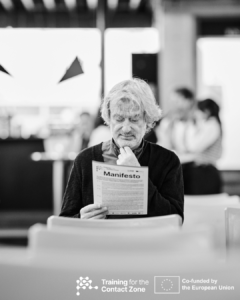
An important milestone of the conference was the presentation of the Contact Zone Manifesto, developed collectively by the project partners.
The Manifesto outlines recommendations for cultural practitioners, institutions, policymakers, and European stakeholders, advocating for the integration of Contact Zone principles—including dialogue, participation, intercultural mediation, and multivocality—into future cultural cooperation and policy development.
Rather than marking the end of the project, the Manifesto serves as an invitation to continue building cultural spaces where difference becomes an opportunity for learning, collaboration, and democratic participation.
Continue Exploring the Project
Although the conference marked the official conclusion of Training for the Contact Zone, its resources remain freely available.
Visitors can explore the project’s Curriculum, Toolkit, Training Materials, Syllabus, Digital Library, Podcasts, and Contact Zone Manifesto through the Training for the Contact Zone website.
If you were unable to attend—or would like to revisit the discussions—the recordings of the conference sessions are now available on the Herengracht 401 YouTube channel.
We would like to thank all speakers, partners, contributors, and participants for making this conference such a meaningful exchange. We look forward to seeing how the Contact Zone methodology continues to inspire dialogue, participation, and cultural democracy across Europe and beyond.
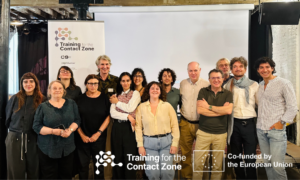
Photos by François de Ribaucourt
Training for the Contact Zone is realised by:

Training for the Contact Zone is co-funded by the European Union within the framework of Erasmus+ Adult Education.